What investors actually read in your pitch deck
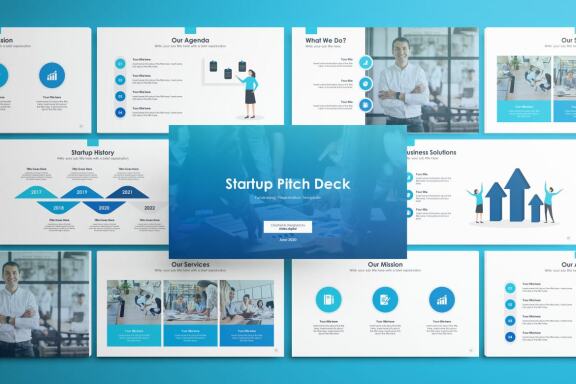
A first-round deck does not get studied. It gets scanned. In our experience reviewing decks with founders, an investor gives a cold deck somewhere between two and four minutes before deciding whether to take a call. That is not laziness. It is arithmetic: a partner seeing several hundred decks a quarter cannot do otherwise.
So the question is not what belongs in a deck. It is what gets read first, and what makes a reader stop scanning and start thinking.
They read the problem before they read you
Almost every founder opens with the company. The reader does not care about the company yet. They care whether the problem is real, expensive, and currently solved badly.
State the problem in the language of the person who has it, not in the language of your product. "Pharmacies in Cairo reorder stock by phone and lose two hours a day doing it" is a problem. "We are building a B2B SaaS supply chain platform" is a category. Categories are forgettable. Specific pain is not.
The three slides that decide the meeting
If a deck gets a second look, it is almost always because of these three:
- The insight slide. What do you know about this market that a smart outsider does not? This is the single most undervalued slide in early-stage decks. It is where you prove you have earned the right to build this.
- The traction slide. Not vanity numbers. One honest metric with a trend line beats six metrics with no direction. If you have no revenue, show usage, retention, waiting list conversion, letters of intent, anything with a real denominator.
- The team slide. Placed near the end by most founders, read early by most investors. Investors are pricing your ability to survive the next three years, and at pre-seed the team is most of the signal.
Ten slides is not a rule, it is a discipline
The ten-slide convention exists because it forces you to cut. A workable order:
- Problem
- Solution, in one sentence and one image
- Why now
- Market size, built from the bottom up
- Product, showing the thing rather than describing it
- Business model
- Traction
- Competition, positioned honestly
- Team
- The ask, with a specific use of funds
If a slide does not change the reader's mind about whether to take the meeting, it belongs in the appendix. Appendices are not a dumping ground, they are a signal that you know the difference between the argument and the evidence.
The mistakes we correct most often
Hiding the ask. Investors want to know what you are raising, at what stage, and what the money buys. Vagueness reads as either inexperience or a fear of being pinned down.
A competition slide with an empty top-right quadrant. Every founder puts themselves alone in the corner. Every investor discounts it. Name real competitors, including the status quo of doing nothing, and explain your wedge.
Top-down market sizing. "The global market is worth 50 billion dollars and we only need one percent" is the fastest way to lose credibility. Build the number from customers, price and frequency instead.
Text density. If a slide needs to be read rather than glanced at, it will not be read at all. One idea per slide, expressed in the headline. The headline should carry the argument on its own.
Write the narrative before you open the design tool
The best decks we work on start as ten sentences in a document. If those ten sentences do not tell a coherent story when read aloud, no amount of typography will rescue them. Design amplifies a clear argument, and it exposes a muddled one.
The short version
- Lead with a specific, expensive problem, not with your company.
- Your insight, traction and team decide the meeting.
- Build market size from the bottom up, always.
- Make the headline of each slide carry the argument.
- Write the story first, design it second.
If you want a second pair of eyes on a deck before it goes out, that is most of what we do. Bring the version you are nervous about.